What actually happens between 07:50 and 14:30
Three stages, three timetables. Read the one for the age your child is now.
Early Years
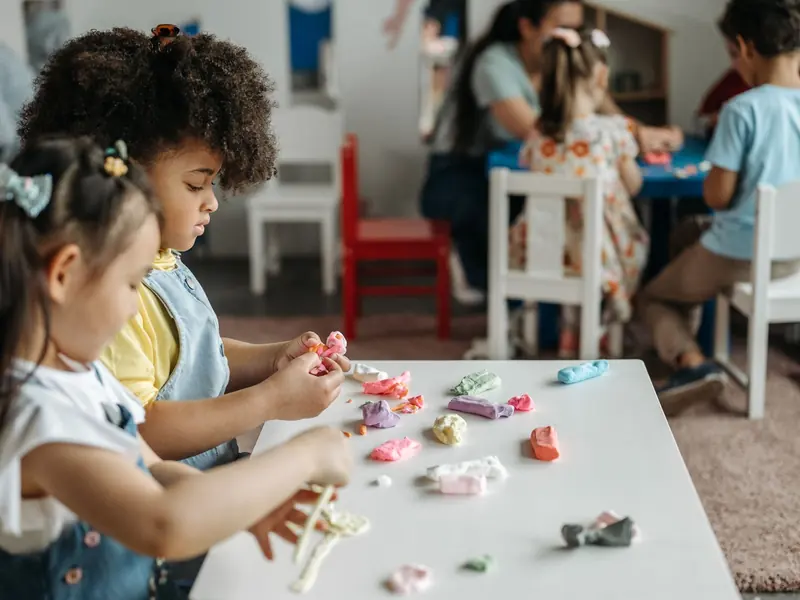
Most of the day is spent choosing. Water, sand, blocks, paint and a garden that is used in every weather except the worst of July. Phonics happens in groups of six, sitting on the floor.
- Class size: 18 children, two adults
Who teaches this stage
- Hana Darwish — Head of Early Years
- Priya Raman — FS2 class teacher
- Maria Santos — FS1 class teacher
The day, hour by hour
- 07:50
- Doors open, soft start
- 08:15
- Circle time
- 08:45
- Phonics, in groups of six
- 09:30
- Snack, then the garden
- 10:30
- Water, sand, blocks, paint
- 11:45
- Lunch
- 12:30
- Story and rest
- 13:15
- Music, art or PE
- 14:00
- Home
Lower Primary
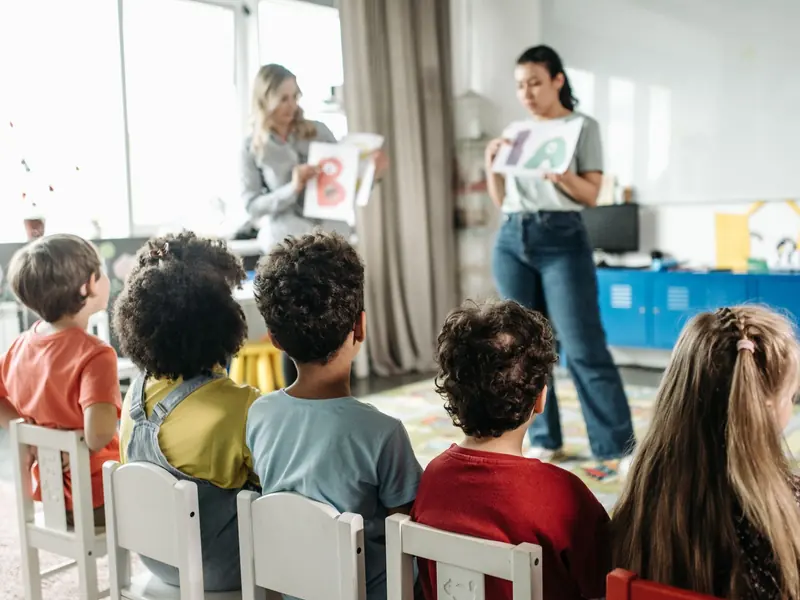
Reading gets serious and so does writing. Maths is taught first thing, when the room is at its sharpest, and every class gets twenty-five minutes outside before it.
- Class size: 22 children, a teacher and an assistant
Who teaches this stage
- Tom Whitfield — Year 2, English lead
- Aisha Mansour — Year 3, Arabic lead
- Grace Mwangi — Year 1
The day, hour by hour
- 07:50
- Doors open
- 08:15
- Registration and morning maths
- 09:00
- English
- 10:00
- Break, twenty-five minutes outside
- 10:25
- Maths
- 11:20
- Topic: science, history or geography
- 12:10
- Lunch and the yard
- 13:00
- Arabic or Islamic studies
- 13:45
- PE, art or music
- 14:30
- Home
Upper Primary
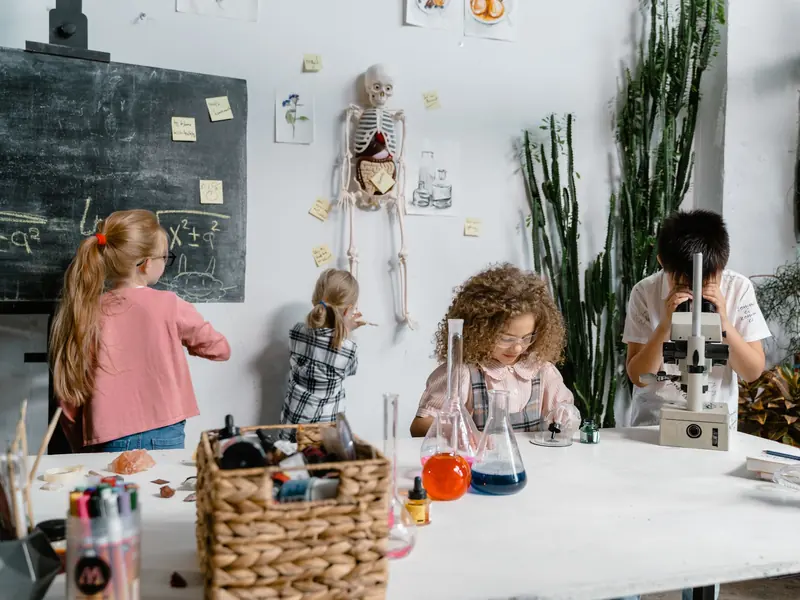
Specialist teaching starts here: science in a lab, computing on real keyboards, and a Year 6 that leaves able to sit an entrance test without being coached for one all year.
- Class size: 24 children, a teacher and subject specialists
Who teaches this stage
- Daniel Okoye — Year 5, science lead
- Layla Haddad — Year 6, maths lead
- Ruth Fernandes — Year 4
The day, hour by hour
- 07:50
- Doors open
- 08:15
- Registration and reading
- 08:45
- English
- 09:45
- Maths
- 10:45
- Break
- 11:10
- Science, in the lab
- 12:00
- Lunch and lunchtime clubs
- 12:50
- Arabic or Islamic studies
- 13:35
- Computing, art, music or PE
- 14:30
- Home
- 14:45
- After-school clubs, until 16:00
The curriculum, briefly
We follow the English National Curriculum from FS1 to Year 6, with the Early Years Foundation Stage in the first two years. Arabic and Islamic studies are taught by specialist teachers to the requirements of the Ministry of Education, and children who arrive with no Arabic start in a separate group rather than at the back of a class.
Reading is assessed every half term, not every year, so a child who slips is caught in six weeks rather than in twelve months. Reports go home twice a year and both of them say where a child sits against the year group, in words, with the number underneath.